DPSIM Static Module is the public entry point for engineers who want to build and evaluate steady-state mineral processing flowsheets with DPSIM.
The module provides a focused workflow for representing mineral processing circuits, configuring unit operation models, reviewing material streams and preparing simulation results for engineering communication.
What is DPSIM Static Module?
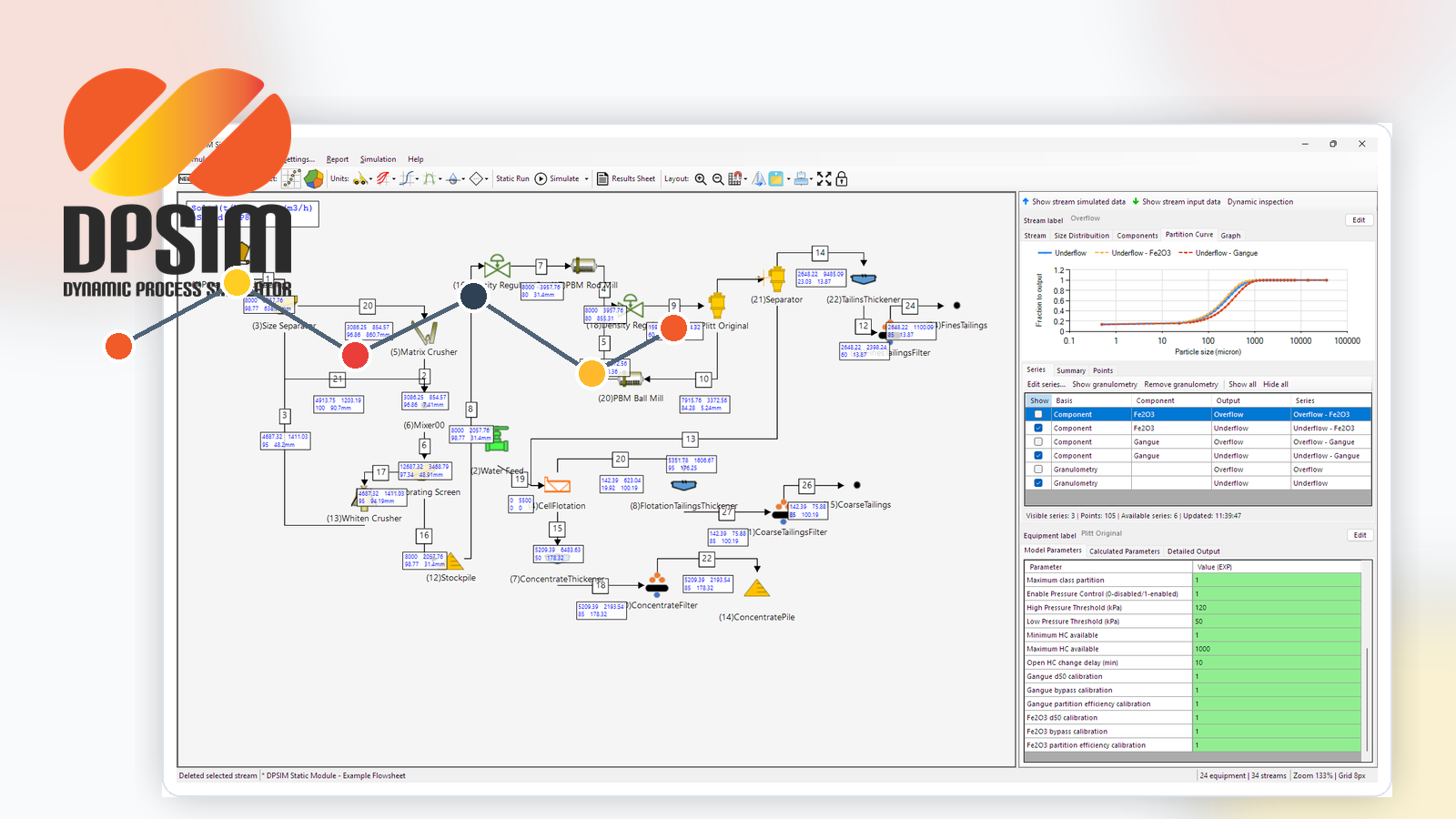
DPSIM Static Module is the public steady-state version of DPSIM. It is designed for engineers who need a practical environment to build mineral processing flowsheets, configure unit operation models, define material streams and review simulation results.
The module focuses on representative operating conditions. It is useful for mass balance review, water balance evaluation, flowsheet comparison, equipment behavior inspection and engineering communication.
DPSIM Static Module is not intended to replace engineering judgment or plant data. Simulation results depend on the quality of the assumptions, model selection, input data and parameter configuration used in each study.
Why Steady-State Simulation Still Matters
Dynamic simulation is important when time-dependent behavior, equipment states, inventories or control logic are part of the study. However, many engineering questions still begin with a steady-state model.
A steady-state simulation provides a clear operating point for reviewing flows, particle size distributions, recoveries, water balance, product streams and circuit configuration. It is often the first step before more advanced dynamic or reliability studies are developed.
Steady-state models also help engineering teams communicate assumptions. When the flowsheet, streams and unit operation parameters are organized in one environment, it becomes easier to review why a result was obtained and which assumptions are driving the calculation.
A Focused Simulation Workflow
DPSIM Static Module is built around a practical workflow:
- create or open a mineral processing flowsheet;
- define feed and material stream properties;
- configure unit operation models;
- connect equipment through process streams;
- run the steady-state calculation;
- inspect stream results, charts and model outputs;
- prepare information for engineering review.
The objective is to move from isolated calculations to a flowsheet-based representation of the circuit. This helps engineers evaluate how unit operations interact and how changes in one part of the flowsheet affect downstream or recirculating streams.
Material Streams and Size Classes
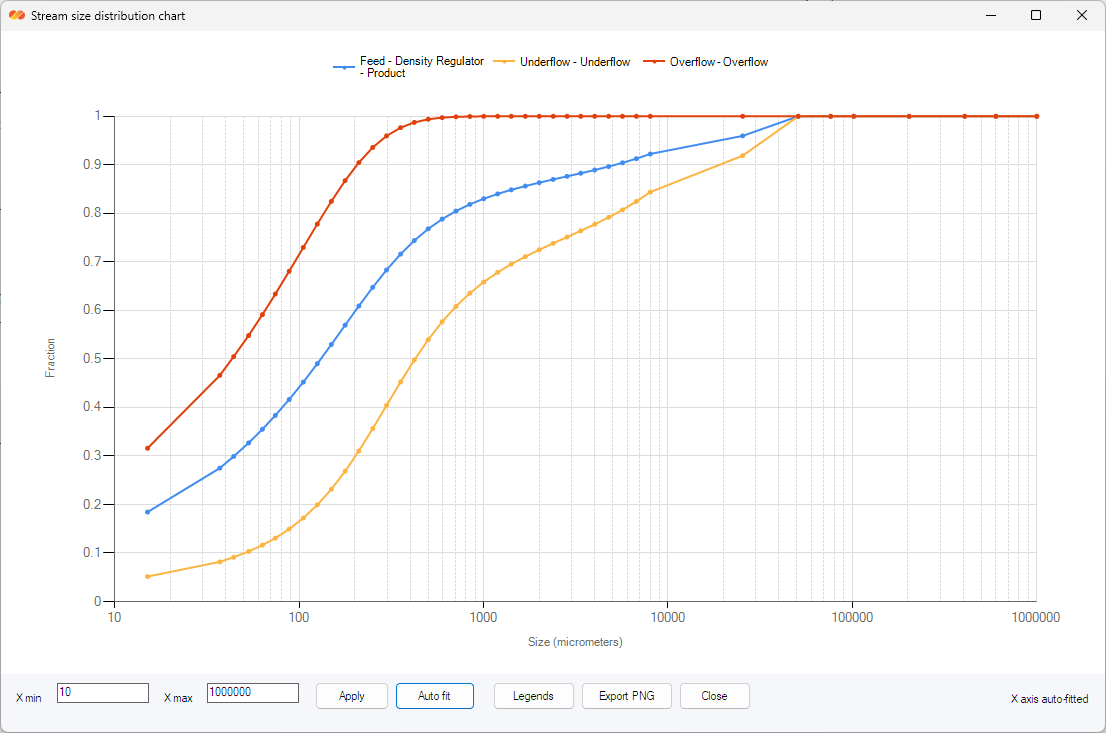
In DPSIM, material streams represent the ore, water and slurry moving through the flowsheet. Depending on the model, streams may include solids flow rate, water flow rate, percent solids, particle size distribution and component distribution.
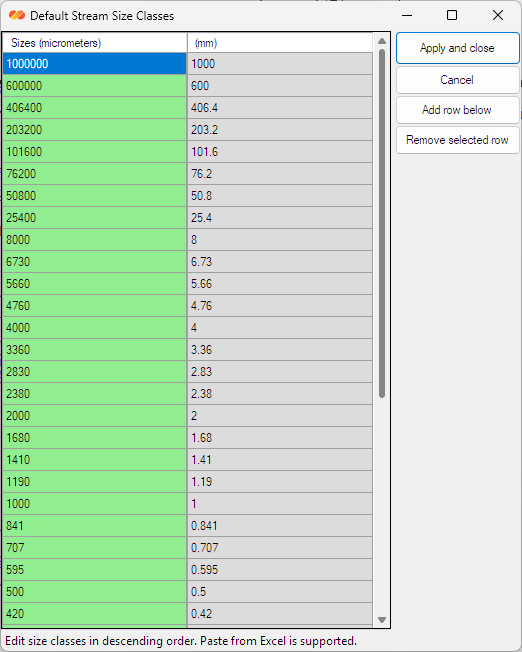
The Static Module supports size class configuration for mineral processing calculations. Size classes should be organized in descending order, consistent with the DPSIM workflow.
This structure is important because mineral processing equipment often responds differently to different particle classes. Screens, hydrocyclones, mills and separation models may depend on particle size, component distribution or both.
Unit Operation Models
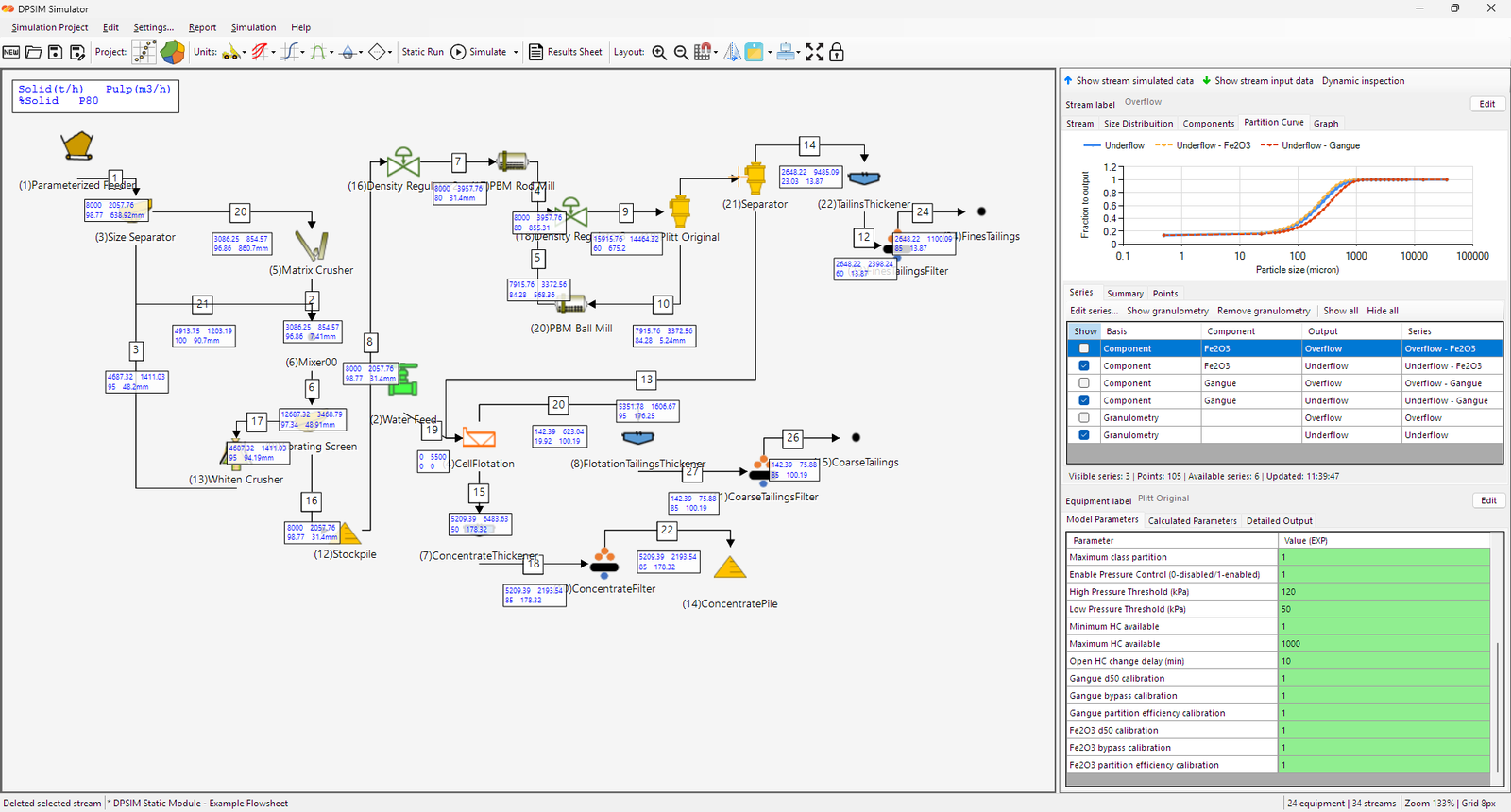
Each unit operation in the flowsheet is represented by a model. The model receives one or more feed streams, applies equations or empirical relationships that describe the equipment behavior, and calculates product streams.
DPSIM Static Module includes public model families for common mineral processing tasks, such as:
- feeds and stream splitters;
- crushing and grinding;
- screening and classification;
- hydrocyclones;
- flotation and concentration;
- dewatering;
- auxiliary operations.
Some models are intentionally simple and useful for early-stage studies or assumptions-based analysis. Other models may require more detailed parameters and stronger calibration. The appropriate model depends on the objective of the simulation and the quality of the available data.
From Model Setup to Engineering Review
A simulation becomes useful when its results can be reviewed, challenged and communicated.
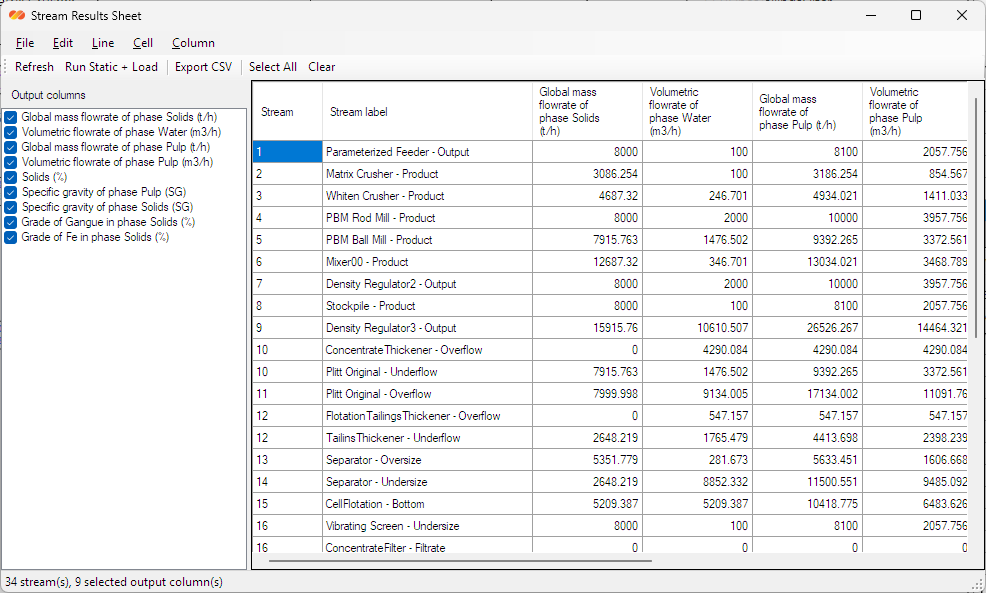
DPSIM Static Module helps engineers inspect material streams, equipment outputs, model parameters and calculated results in a structured way. This supports engineering discussions about flowsheet configuration, operating assumptions, equipment performance and process alternatives.
The module can support typical engineering review tasks such as:
- checking mass and water balance consistency;
- comparing product streams;
- reviewing particle size distributions;
- inspecting model parameters;
- identifying streams or equipment that require further review;
- preparing results for reports or technical discussions.
Public Model Reference
The DPSIM website includes a public model reference to help users review available unit operation models, parameters and assumptions.
The model reference is useful when setting up a flowsheet, checking how a model should be configured or explaining simulation assumptions to other engineers.
How DPSIM Static Module Relates to DPSIM Full
DPSIM Static Module is the public starting point for steady-state simulation and model review.
DPSIM Full extends the same engineering framework to advanced applications, including dynamic simulation, process control logic, reliability studies, material handling behavior and project-specific workflows.
For these applications, EPM can support study definition, model setup and engineering interpretation. This distinction allows engineers to begin with accessible steady-state simulation while keeping a path open for more advanced process behavior and production-risk studies.
Get Started
A practical way to begin is:
- Download the DPSIM Static Module.
- Open or create a flowsheet.
- Define feed, water and material stream properties.
- Configure size classes in descending order.
- Select and configure unit operation models.
- Run the steady-state simulation.
- Review stream results, plots and model parameters.
- Use the Model Reference to understand model assumptions and parameters.
DPSIM Static Module is intended to make mineral process simulation more accessible while preserving a technical workflow that engineers can review and communicate.